


A cybersecurity program for small businesses typically includes risk assessment, security policies, employee training, technical controls like endpoint protection and MFA, data backup and recovery, and an incident response plan. It also includes ongoing monitoring, vendor management, and periodic testing to keep defenses current. The goal is practical risk reduction...
How to Choose the Right Cybersecurity Stack for a Small Business

Choosing the right cybersecurity stack for a small business starts with identifying your biggest risks, your most valuable data, and the few controls that stop the most common attacks. Focus first on email and identity security, endpoint protection, and reliable backups, then layer monitoring and policies as your business grows....
Endpoint Protection vs Endpoint Detection and Response (EDR): What’s the Difference?
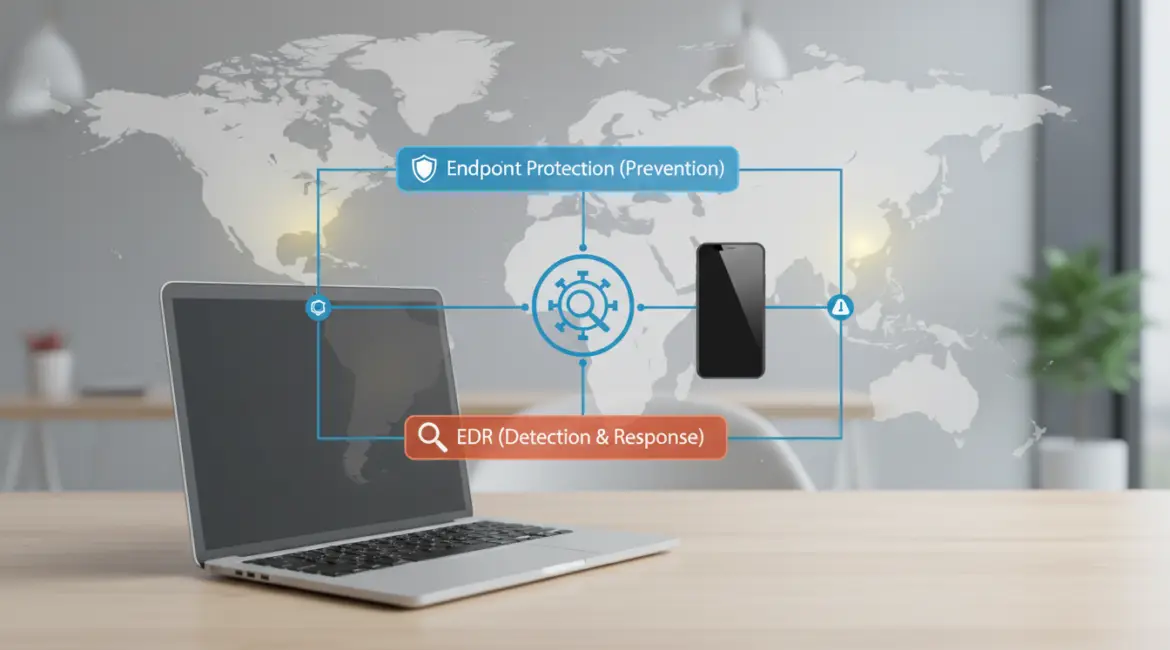
Endpoint protection focuses on preventing malware and unsafe activity on devices, while endpoint detection and response (EDR) focuses on detecting, investigating, and responding to threats that slip through. In endpoint protection vs endpoint detection and response, the real distinction is prevention-first controls versus continuous visibility and response workflows. Most modern...