

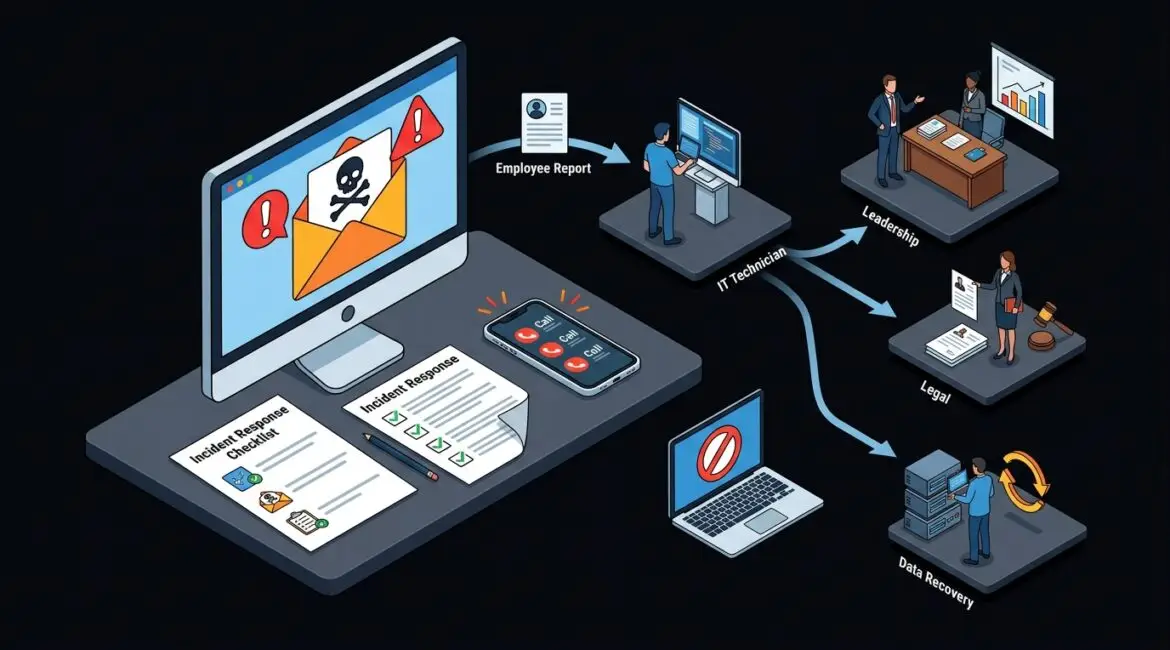
A security incident escalation process is the documented path your team follows to identify, prioritize, communicate, and respond to a cybersecurity issue before it grows into a larger business disruption.
What Is a Cybersecurity Tabletop Exercise and Why Should You Conduct One?

A cybersecurity tabletop exercise is a guided discussion that walks your leadership team through a realistic cyber incident so you can test decisions, roles, communication, and recovery plans before a real disruption happens.
What Is Cyber Resilience and Why Is It Different from Cybersecurity?

Cyber resilience is a business’s ability to prevent, withstand, and recover from cyber incidents while keeping critical operations moving. It goes beyond cybersecurity by focusing not only on protection, but also on continuity, recovery, and practical response when something goes wrong.