

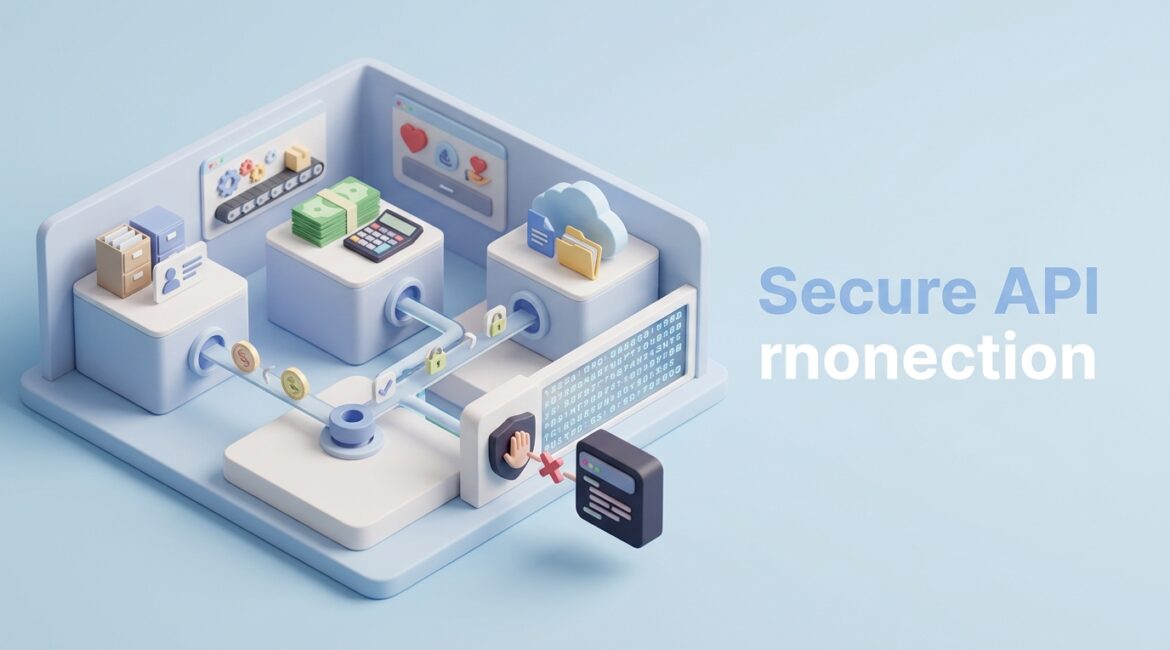
Secure API access is the practice of controlling and protecting how software applications connect to each other and exchange data. It matters because many of the tools your business depends on, from accounting platforms to donor systems to manufacturing dashboards, rely on APIs behind the scenes, and weak access controls can expose sensitive data or disrupt operations.
If your business uses Microsoft 365, CRM tools, payment platforms, cloud file storage, shipping systems, or line-of-business applications, you are already relying on APIs whether you realize it or not. The question is whether those connections are being managed with the same care as user logins, email security, and endpoint protection.
What an API is in plain English
An API, or application programming interface, is a way for one software system to request information or trigger an action in another system. Think of it as a controlled doorway between applications.
For example, your accounting platform may send invoice data to your CRM. Your nonprofit donor database may connect to an email platform. A manufacturer may pull production data from equipment software into a reporting dashboard. Those connections often happen through APIs.
When API access is secure, only approved systems and users can use that doorway, and only in approved ways. When it is not secure, that doorway can become a quiet source of data exposure, fraud, or downtime.
What secure API access actually includes
Secure API access is not one setting. It is a set of controls that determine who can connect, what they can do, what data they can reach, and how that activity is monitored.
- Authentication to verify the identity of an application, service, or user
- Authorization to limit what that connection is allowed to access or change
- Encryption to protect data while it moves between systems
- Token management to avoid long-lived credentials that are easy to misuse
- Logging and monitoring to track activity and spot unusual behavior
- Rate limiting to prevent abuse, overload, or automated attacks
- Lifecycle management to review, rotate, and remove old integrations
In business terms, secure API access means your software connections are governed, documented, and reviewed instead of being left to grow unchecked.
Why business leaders should care
Many cyber incidents do not begin with a dramatic system breach. They start with an overlooked connection, an old integration account, or a third-party tool that has more access than it needs.
That matters because APIs often connect directly to valuable information such as customer records, financial data, employee details, donor histories, inventory, or internal documents. If one connection is poorly secured, the impact can spread quickly.
For a professional service firm, that might mean client documents exposed through a document automation platform. For a nonprofit, it could mean donor data accessed through a fundraising integration. For a manufacturer in Southeast Wisconsin or Northeast Illinois, it might mean an ERP connection failing during production hours and delaying shipments.
Common business risks tied to weak API access
Too much access
Some integrations are given broad administrative permissions simply because it is faster during setup. That may get the tool working, but it also increases the damage if the account is compromised or misused.
Old connections that nobody owns
Businesses often accumulate software links over time. A former employee sets up a reporting tool, a consultant connects a cloud app, or a department signs up for a niche platform. Months later, nobody is tracking whether that connection is still needed.
Poor credential handling
API keys and tokens are sometimes stored in spreadsheets, shared by email, or left unchanged for years. That creates the same kind of risk as poor password management, except these credentials may provide direct system-to-system access.
Limited visibility
If your team cannot see which applications are connected, what permissions they hold, and how often they are used, it becomes difficult to manage risk. This is one reason broader network visibility and SaaS oversight matter.
What secure API access looks like in practice
A secure approach is usually not complicated, but it does require discipline. The goal is to treat application connections as business assets that need clear ownership and regular review.
- Keep an inventory of applications and integrations
- Assign an owner for each connection
- Use least-privilege access so integrations only get the permissions they need
- Require strong identity controls for admin accounts that approve or manage integrations
- Rotate keys, secrets, and tokens on a schedule
- Remove unused or duplicate connections
- Log activity and review exceptions
- Document dependencies so your team knows what breaks if an integration fails
This is also where governance matters. If your business has no standard for approving new software connections, risk tends to grow quietly. Our article on technology governance covers why consistent decision-making matters for smaller organizations.
Real-world examples that make the issue clearer
Manufacturer example
A manufacturer in Kenosha connects its ERP system to a shipping platform and a customer portal. If that API access is not documented and a token expires unexpectedly, orders may stop syncing. Even a four-hour disruption could delay shipments, tie up staff time, and create avoidable customer service issues.
If ten employees lose an average of two hours each while manually checking orders and re-entering data, that is 20 hours of lost productivity in a single day, before considering delayed revenue or freight mistakes.
Nonprofit example
A nonprofit uses an online donation platform that connects to its CRM and email marketing tool. If the integration has unnecessary permissions and is compromised, donor contact details and giving history may be exposed. That can create reputational damage, compliance concerns, and a costly cleanup effort.
Professional services example
A law firm or accounting firm may use document management, e-signature, billing, and client portal tools that all exchange data. If one third-party application has broad access to client files, a single weak point can affect confidentiality across multiple systems.
How secure API access supports business continuity
Security is only part of the story. Good API management also improves reliability.
When integrations are well documented and monitored, your team can troubleshoot faster, recover from failures sooner, and avoid mystery outages. That supports smoother operations and reduces the cost of reactive support.
It also ties into broader planning. Businesses that already focus on building an IT environment that is easier to manage tend to handle software integrations more effectively because they standardize systems, clarify ownership, and reduce sprawl.
Signs your organization should review API access now
- You use many cloud applications across departments
- Employees can connect new apps without a review process
- You are unsure which third-party tools have access to Microsoft 365, CRM, or file storage
- Former employees or vendors may have set up integrations that are still active
- You have experienced unexplained sync failures or duplicate data issues
- You are preparing for compliance reviews, cyber insurance questions, or vendor assessments
If any of those sound familiar, an API access review is worth doing before a problem forces the issue.
What business leaders should ask their IT team or provider
You do not need to be technical to ask good questions. Start with these:
- Which business systems are connected through APIs today?
- Who owns each integration?
- What permissions does each one have?
- How are API keys, secrets, and tokens stored and rotated?
- How do we detect unused or risky integrations?
- What happens to operations if a critical connection fails?
- Do we review third-party application access on a schedule?
These questions often reveal whether your environment is being managed proactively or only addressed when something breaks.
Where Platinum Systems fits in
At Platinum Systems, we view secure API access as part of a larger business technology strategy. It connects to identity management, vendor oversight, documentation, operational resilience, and long-term planning.
For organizations across Southeast Wisconsin and Northeast Illinois, that means looking beyond individual apps and asking whether your technology environment is secure, supportable, and aligned with how your business actually works. If you’re ready to strengthen your technology, reduce risk, and plan for the future, contact Platinum Systems to schedule a technology strategy discussion.
Conclusion
Secure API access is the disciplined management of how software systems connect, share data, and perform actions. When handled well, it reduces risk, limits downtime, and helps your business operate with fewer surprises.
If you would like help reviewing application access, documenting critical integrations, or building a more manageable technology environment, Platinum Systems can help you evaluate the right next steps.