
Endpoint Detection and Response for small businesses is an advanced cybersecurity solution that monitors devices, detects threats in real time, and responds before damage spreads. Yes, small and mid sized businesses need it, especially as ransomware and targeted attacks continue to rise across Wisconsin and Illinois.
If your company relies on laptops, servers, or remote employees, you already have endpoints. Those endpoints are the primary entry point for cybercriminals.
What Is Endpoint Detection and Response?
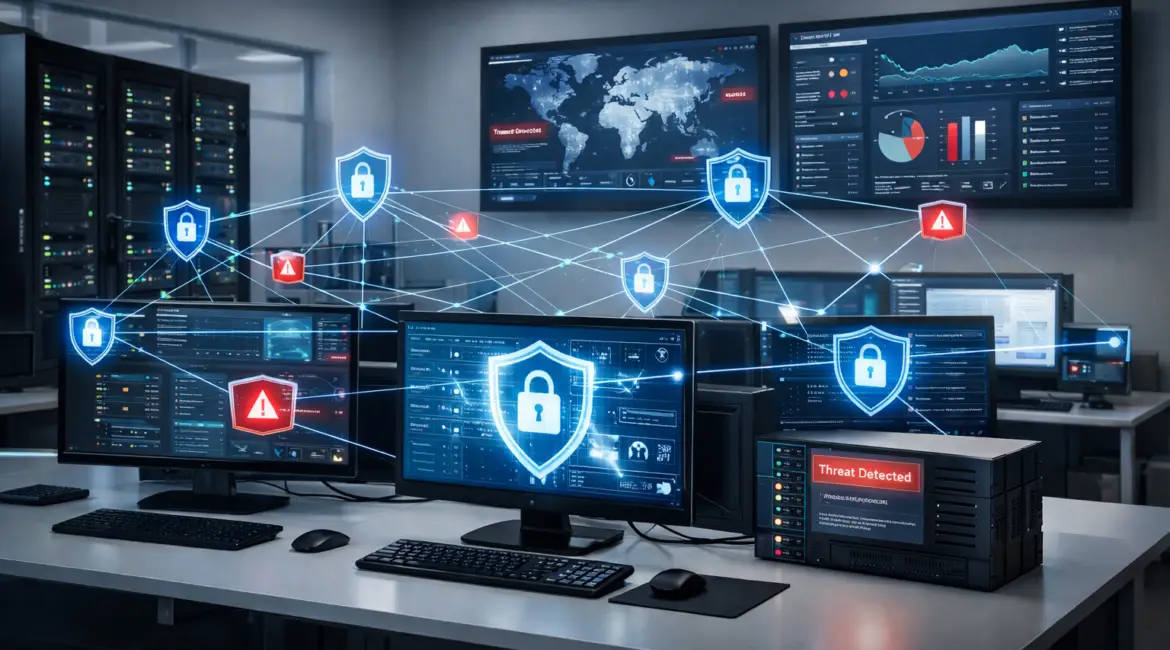
Endpoint Detection and Response, often called EDR, is a security technology that continuously monitors computers, servers, and mobile devices for suspicious activity.
Traditional antivirus looks for known threats. EDR looks for behavior.
It tracks patterns such as:
-
Unusual file encryption activity
-
Unauthorized PowerShell commands
-
Suspicious login attempts
-
Malware attempting to disable security tools
-
Lateral movement between systems
When a threat is detected, EDR can:
-
Isolate the infected device from the network
-
Stop malicious processes
-
Alert a Security Operations Center
-
Provide forensic data for investigation
For small businesses, this level of protection is critical. Many attacks today bypass basic antivirus tools.
Why Are Small Businesses Being Targeted?
Many business owners assume cybercriminals only target large corporations. That is no longer true.
Small and mid sized companies in Southeast Wisconsin and Northeast Illinois are frequently targeted because:
-
They often lack 24/7 monitoring
-
Security tools are outdated
-
Employees may not receive regular training
-
Attackers assume defenses are weaker
Manufacturers are common targets because downtime disrupts production. Nonprofits are targeted because they handle sensitive donor data but often operate with tight budgets.
Ransomware groups actively scan for small organizations that do not have advanced endpoint security in place.
What Happens Without Endpoint Detection and Response?
Without Endpoint Detection and Response for small businesses, threats often go unnoticed until it is too late.
Here is a common real world scenario:
A staff member clicks a phishing email attachment. Malware installs quietly. It spreads across shared drives overnight. By morning, production files are encrypted.
The result:
-
3 days of operational downtime
-
$25,000 to $75,000 in lost revenue for a small manufacturer
-
Potential ransom demand of $50,000 or more
-
Recovery costs including IT labor and system rebuilds
In many cases, the total financial impact exceeds $100,000.
Basic antivirus may not detect modern ransomware variants. EDR monitors behavior, which allows it to detect and stop encryption activity before the entire network is locked.
How Does Endpoint Detection and Response Work With a Security Operations Center?
EDR software alone is not enough. It must be monitored.
A managed Security Operations Center reviews alerts, investigates suspicious activity, and responds quickly. This includes:
-
Reviewing threat intelligence
-
Confirming whether activity is malicious
-
Remotely isolating compromised systems
-
Coordinating remediation
For businesses in Kenosha and surrounding communities, this means having enterprise grade monitoring without hiring a full in house cybersecurity team.
Building an internal 24 hour security team can cost:
-
$80,000 to $120,000 per analyst per year
-
Multiple analysts for coverage
-
Ongoing training and tool investment
Managed Endpoint Detection and Response for small businesses provides similar protection at a predictable monthly cost.
Is Antivirus Enough Anymore?
No.
Traditional antivirus relies on signature based detection. Modern attacks use:
-
Fileless malware
-
Zero day exploits
-
Living off the land techniques using legitimate system tools
EDR identifies suspicious behavior even if the specific malware has never been seen before.
For example, if a process suddenly begins encrypting hundreds of files rapidly, EDR can terminate it instantly, even without a known signature.
This shift from reactive to proactive protection is essential.
What Does Endpoint Detection and Response Cost for Small Businesses?
Costs vary depending on the number of devices and level of monitoring, but most small businesses can expect:
-
$8 to $20 per device per month for EDR software
-
Additional cost for 24/7 SOC monitoring and response
For a 25 user company, this may range from $500 to $1,200 per month depending on the service level.
Compare that to a single ransomware incident exceeding $75,000 in downtime and recovery costs.
Cybersecurity should be evaluated as risk reduction, not just expense.
Who Should Absolutely Have EDR?
Endpoint Detection and Response for small businesses is especially important if your company:
-
Handles customer financial or health data
-
Must meet compliance requirements
-
Relies heavily on shared file systems
-
Operates production equipment connected to the network
-
Has remote or hybrid employees
-
Carries cyber insurance
Many cyber insurance carriers now require advanced endpoint protection and documented monitoring.
Without it, you may face higher premiums or denied claims.
How Does EDR Fit Into a Broader Security Strategy?
EDR is not a standalone solution. It works best as part of a layered cybersecurity approach that includes:
-
Firewall and network security
-
Multi factor authentication
-
Email filtering
-
Security awareness training
-
Backup and disaster recovery
-
Regular vulnerability assessments
A proactive Managed Services Provider coordinates all of these components.
The goal is simple: detect threats early, contain them quickly, and recover without business disruption.
Why Local Businesses Need Proactive Protection
Businesses in Kenosha, Racine, Milwaukee, and Northern Illinois face the same cyber threats as national corporations.
The difference is scale.
A Fortune 500 company may survive a week of downtime. A 40 employee manufacturer may not.
Endpoint Detection and Response for small businesses gives local companies access to enterprise level protection without enterprise level staffing costs.
It transforms cybersecurity from reactive cleanup to active defense.
Final Thoughts
Endpoint Detection and Response for small businesses is no longer optional. It is a foundational security control that protects your devices, data, and operations from modern threats.
If you are unsure whether your current protection includes true behavioral monitoring and 24/7 response, now is the time to evaluate your cybersecurity strategy. A proactive review can identify gaps before they become costly incidents.
Frequently Asked Questions
What is Endpoint Detection and Response for small businesses in simple terms?
Endpoint Detection and Response for small businesses is advanced security software that monitors company devices for suspicious behavior and stops threats before they cause damage. Unlike traditional antivirus, it focuses on detecting abnormal activity such as ransomware encryption or unauthorized access attempts. It also records detailed data so security teams can investigate and respond quickly. For small organizations, it provides enterprise grade visibility without building a full internal cybersecurity team.
Is Endpoint Detection and Response necessary for a small company with fewer than 20 employees?
Yes. Cybercriminals often target smaller companies because they assume security is weaker. Endpoint Detection and Response for small businesses helps protect every laptop and server, regardless of company size. Even a 10 person organization can suffer severe financial loss from ransomware or data theft. The cost of protection is typically far less than the cost of downtime, recovery, legal exposure, and reputational damage.
How is EDR different from traditional antivirus software?
Traditional antivirus looks for known malware signatures. Endpoint Detection and Response for small businesses monitors device behavior in real time. It detects suspicious actions such as mass file encryption, credential misuse, or unusual administrative commands. It can isolate devices and stop threats immediately. This behavioral approach allows EDR to catch zero day attacks and fileless malware that traditional tools may miss.
Does Endpoint Detection and Response help with cyber insurance requirements?
In many cases, yes. Cyber insurance providers increasingly require advanced endpoint protection and documented monitoring. Endpoint Detection and Response for small businesses demonstrates that your company has proactive threat detection and response capabilities. This can help satisfy underwriting requirements and potentially reduce premiums. Without proper endpoint security, claims related to preventable breaches may be challenged.
Can a Managed Services Provider manage EDR for my business?
Yes. A Managed Services Provider can deploy, monitor, and manage Endpoint Detection and Response for small businesses as part of a broader cybersecurity strategy. This typically includes 24/7 Security Operations Center monitoring, alert investigation, and incident response coordination. For businesses in Southeast Wisconsin and Northeast Illinois, partnering with a proactive provider ensures local accountability and strategic guidance.